 Neuriya

Connect
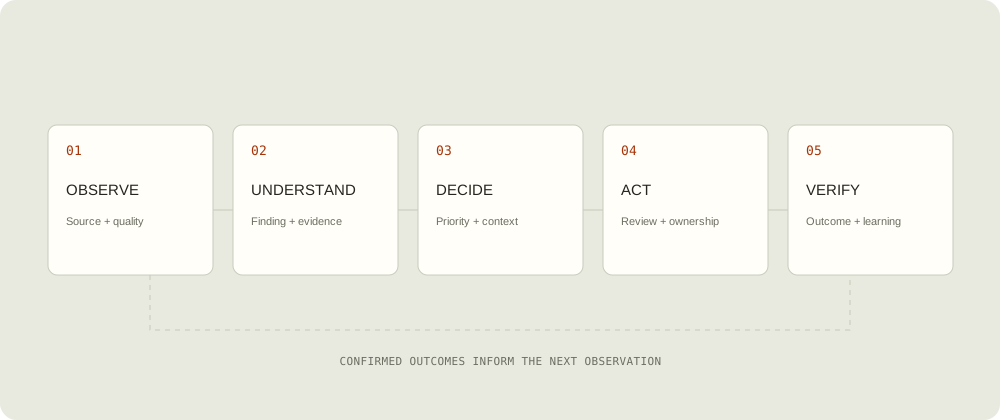
A common starting point. Bring supported inputs together, check quality and preserve source history before analysis begins.
Explore Connect ↗Turn imagery, sensor context, and operational records into decisions your team can explain—and outcomes it can verify.
Meet the intelligence layer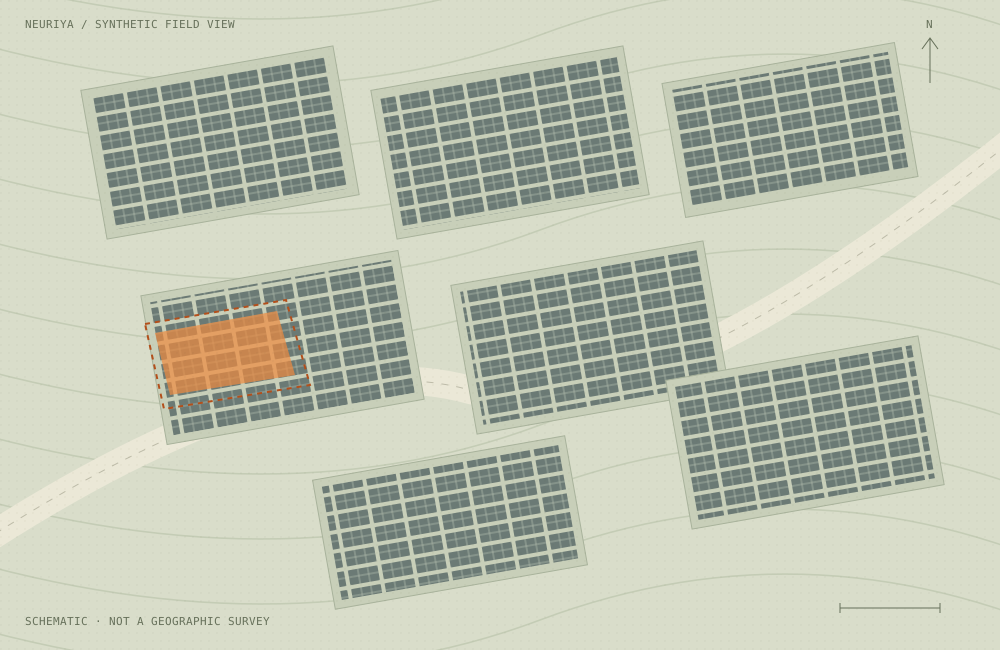
Localized thermal contrast. Review the survey conditions before recommending an inspection.
Know where the evidence comes from.
Make assumptions and uncertainty visible.
Connect decisions to real-world outcomes.
The problem isn’t a lack of data.
It’s the distance between a signal and a decision someone can stand behind.
A visible change needs an observation date, suitable resolution, a baseline, and a connection to the asset it could affect.
An anomaly alone does not tell an operator what to inspect, why it matters, or which uncertainty to resolve first.
An inspection closes a task. A verified outcome explains whether the original finding was correct and the intervention worked.
Bring observations and operational records together. Check their dates, licensing, resolution, and quality before drawing a conclusion.
Output: a traceable observation, ready for analysis.
A common starting point. Bring supported inputs together, check quality and preserve source history before analysis begins.
Explore Connect ↗
Context that stays connected. Link sites, assets, observations, maintenance records and decisions in a shared operational history.
Explore Atlas ↗
Find the change worth reviewing. Compare observations against a task-specific baseline and surface findings with explicit limitations.
Explore Signal ↗
Understand the case behind a finding. See the supporting evidence, alternative explanations and the questions that still need an answer.
Explore Reason ↗
Compare your next moves. Explore inspection priorities against budget and evidence assumptions, with visible tradeoffs.
Explore Scenario ↗
Take action. Keep the receipt. Review recommendations, assign follow-up and distinguish completed work from verified outcomes.
Explore Flow ↗Select a finding. Challenge the evidence. Adjust the budget. See how your next move changes.
Approve a finding, then create a simulated inspection task.
Synthetic inputs, illustrative scores, and session-only state. Export before leaving. No account, tracking, or live sensor connection.
Connect site-scale changes, drone observations, and operational context to help an asset team decide which inspections deserve attention. Satellite imagery supports site context; equipment-level faults require suitable higher-resolution data.
ILLUSTRATIVE FIELD VIEW / SYNTHETIC DATA
A high score is a starting point for a question. The evidence behind it is what makes the answer useful.
Explore the value of time reclaimed from manual review. Change every assumption to reflect your own operation.
18 review hours potentially reclaimed
24 sites × 3 hours × 25% × $65/hour.
A planning estimate, not measured savings, cash savings, or a return-on-investment guarantee. Reclaimed time creates value only if it can be used productively.
Neuriya is a proposed operational-intelligence product connecting observations, asset context, reviewable recommendations, and outcomes. This website implements an interactive browser prototype; it does not connect to a production AI service.
The initial focus is renewable energy asset managers and operations teams coordinating inspection across solar sites. Agriculture and environmental workflows illustrate adjacent applications that require their own validation.
No. Every scene, observation, score, task, and inspection estimate in Signal Lab is synthetic. The demo runs locally in your browser without a live satellite feed or external model endpoint.
Depending on the task: licensed satellite imagery, suitable drone surveys, operational telemetry, asset registers, and work records. Support must be established for each format, source, and deployment.
That depends on the measurement and resolution. Site-scale imagery provides context. Equipment-level assessment generally requires suitable higher-resolution inspection data and independent verification.
The proposed workflow retains evidence and alternative explanations for a human reviewer. The demo lets you approve or defer a recommendation and create a simulated task. It never dispatches a real inspection.
No certification, audit, or independently measured model performance is represented by this concept website. The Trust page explains the evidence that would be required for production procurement.
A pilot should be scoped around one decision, available data, limited assets, and agreed success measures. Imagery, integration, specialist review, and deployment requirements affect the proposal.
Demo state and inquiry inputs remain in memory in the current browser tab. The inquiry composer can create a local download; it does not send a message. Hosting providers may keep ordinary request logs.
Try a scenario, export its evidence report, then describe one decision you want to improve using the Field Trial inquiry composer. Use real workflow details without uploading sensitive operational files.
Start with one recurring decision, the data you already have, and a result you can independently verify.
No account required for the demo. No real-world actions are executed.